
Turquoise Inlay Commitment Rings
I was so honored to create one of a kind his and hers wedding bands for dear friends, G & A, this year. They had seen and loved the texture and character of my cuttlefish cast rings and knew they wanted a variation on those pieces with inlaid stone. After a lovely in person discussion in the studio, we decided on a round/oval inlay for her and a rectangular inlay for him - Morenci Turquoise for both.
I’ve had sizing problems with inlay in the past - it is hard to resize inlay as the stone is cut to fit the exact size of the ring and turquoise and glue don’t withstand heat. And as I’m still honing this skill set, I made sterling silver samples for the couple to try on and keep, a little extra treat.
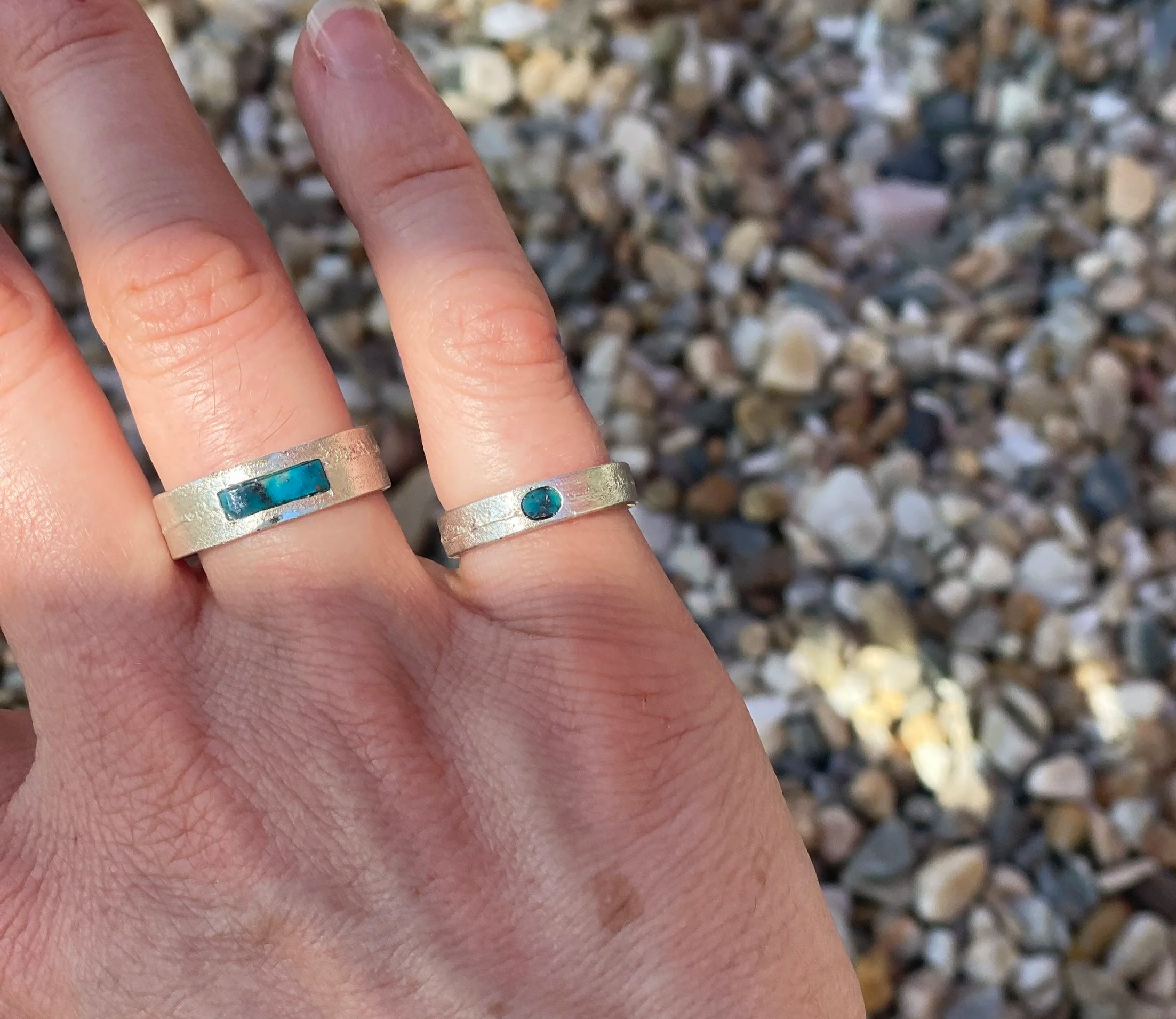
Rough sterling silver samples
Once the samples were approved, came all the work of fabricating these rings in 10k Fairmined yellow gold. We opted to go with sandcasting for a subtler, more uniform texture than cuttlefish. See below for all the steps along the way.
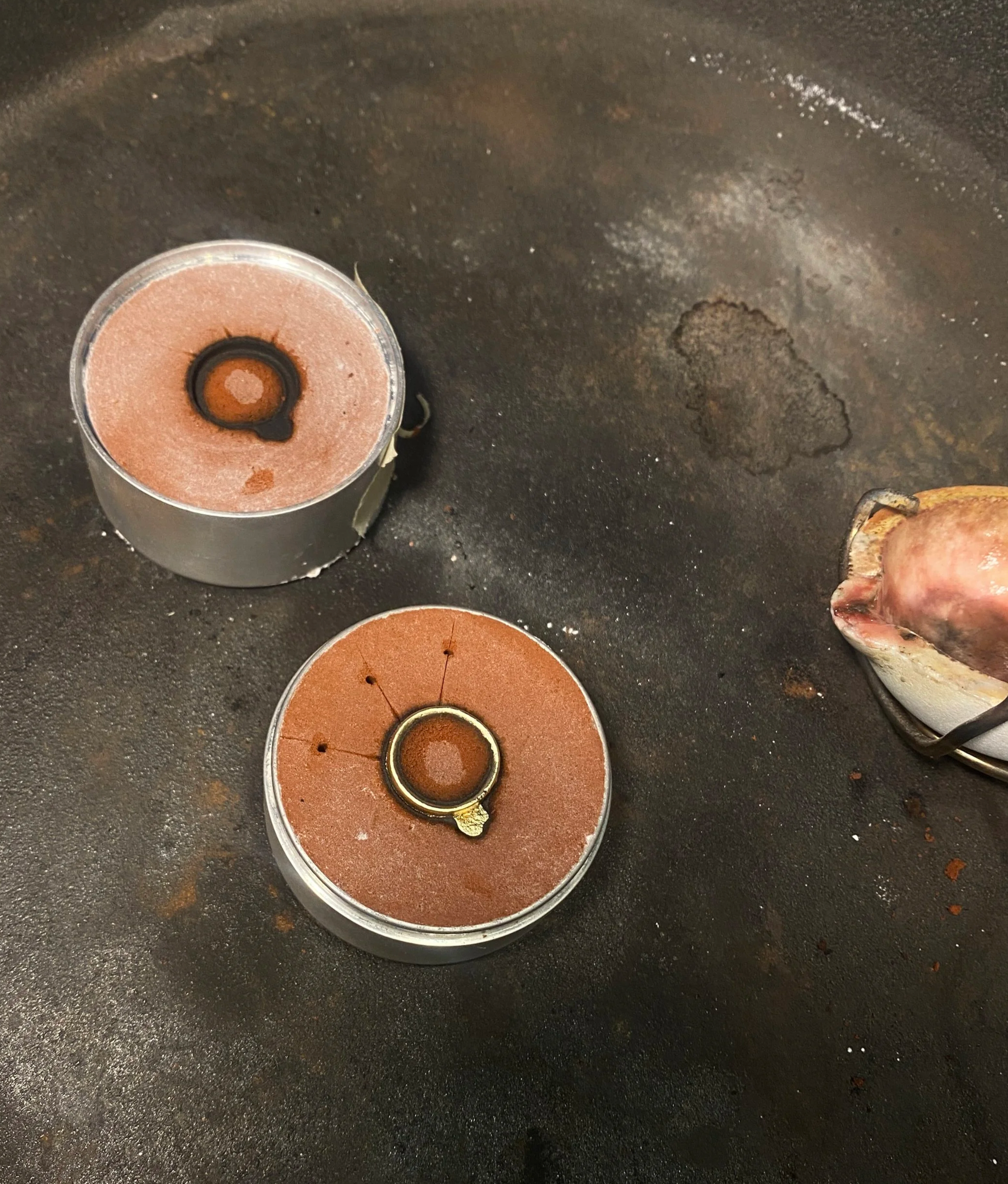
1 - Sandcasting
A ring form is pressed into the compressed sand & removed, leaving the imprint. The 3 holes are vents for air to escape when the molten metal is poured. And off to the right is the crucible from which I poured the gold.
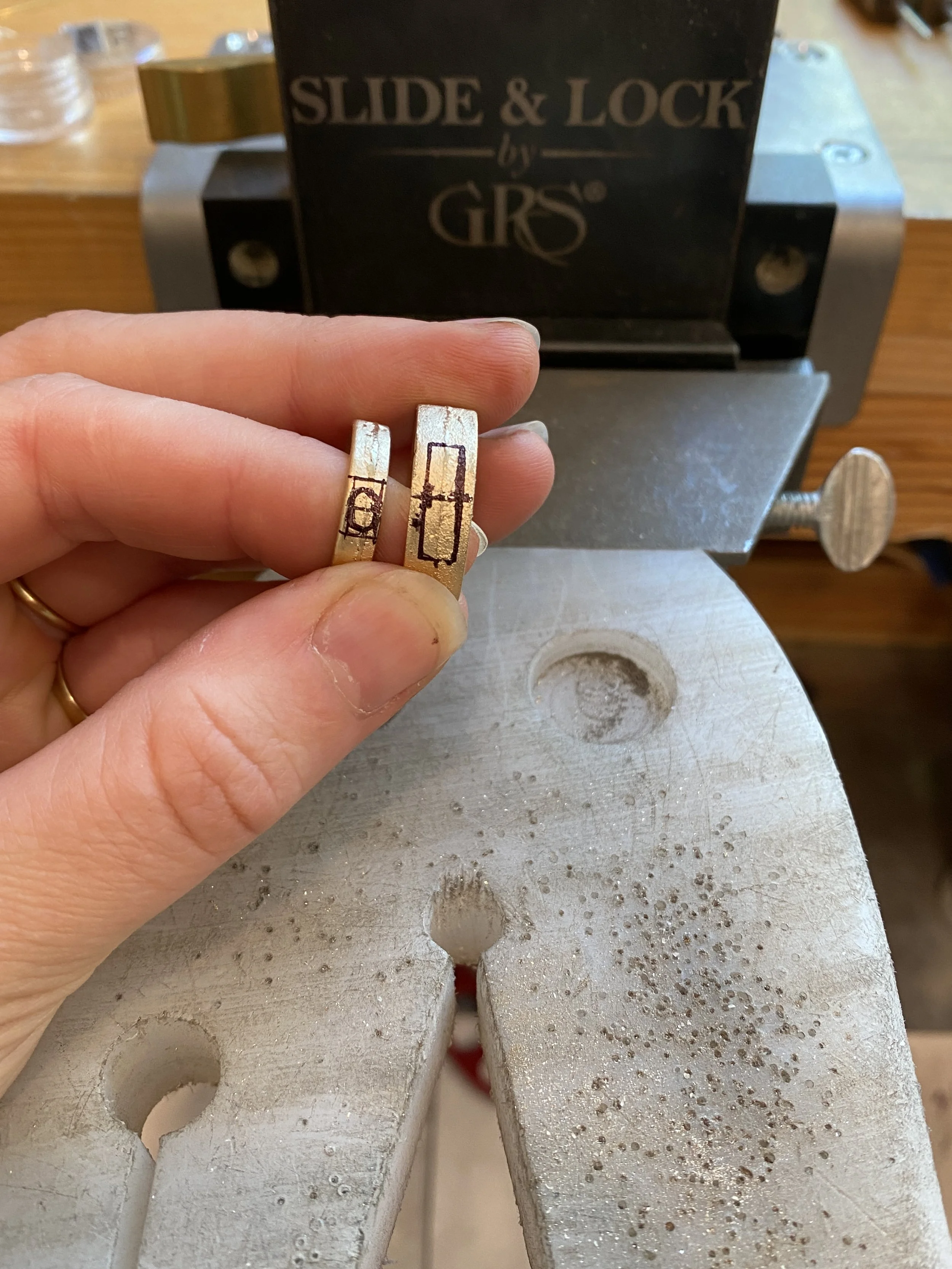
2 - cutting the setting
I map out the stones and positioning on the rings. Then I cut the seat out alongside cutting the stones to make sure each fits. It’s a back and forth between metal an stone to ensure the best fit possible.
3 - CUTTING THE STONE
I attached the stones to nails via superglue (as they are too small for my other lapidary tools). I work cautiously to make sure I don’t take off too much material while getting the shape just right.
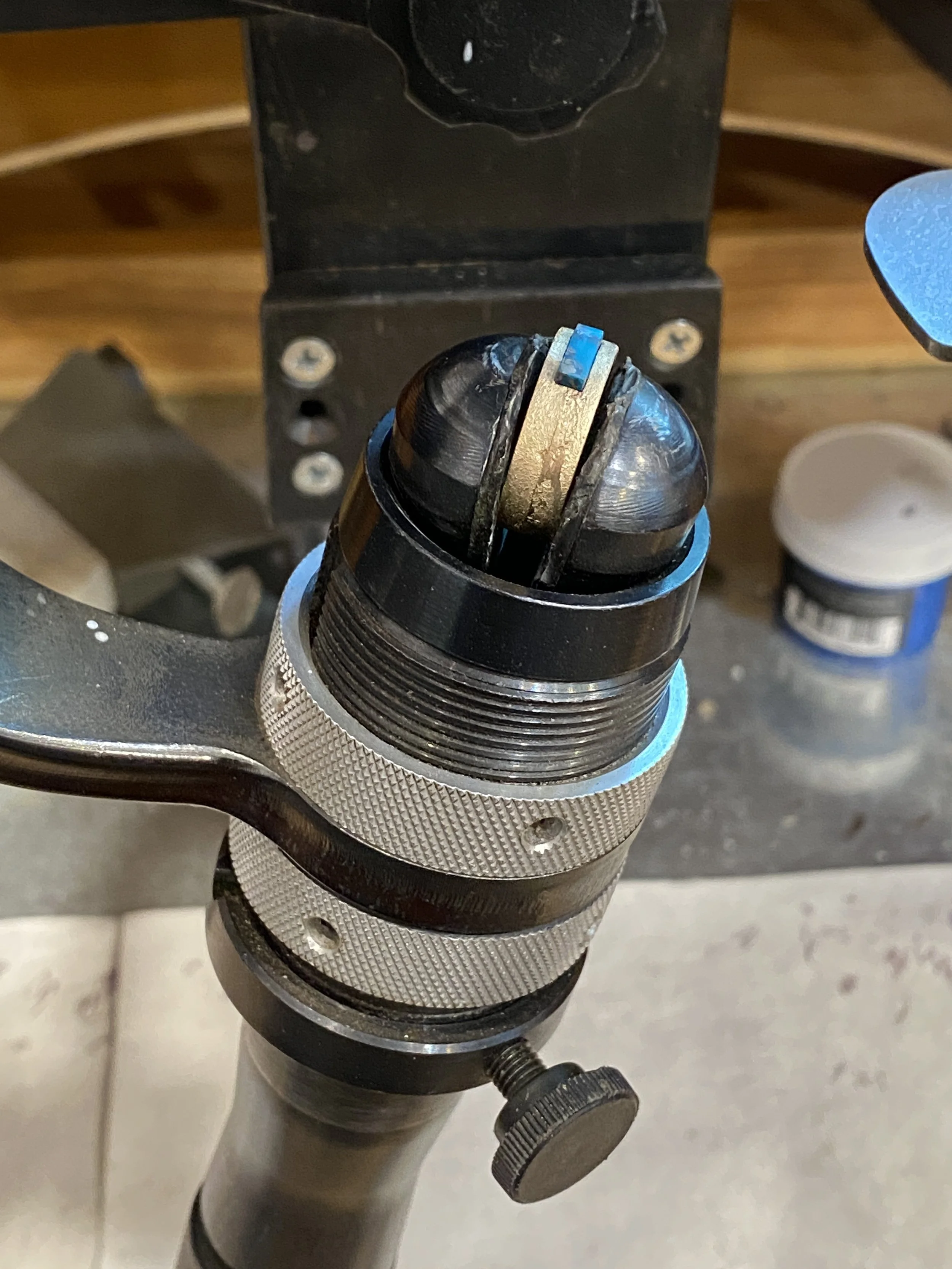
4 - fit check
Oooh cozy, snug stone. We love to see it.
Next the stones get glued in place using museum quality archival glue.
5 - FINAL STONE POLISH
Using the wheels, I work the stone down to be flush with the ring and nicely polished.
These rings we left in their matte state straigh out of casting, which will shine over time with daily wear.
A Short History of Morenci Turquoise
(For the collectors, the rockhounds, and the quietly obsessed.)
The Morenci mine sits in Southeastern Arizona, tucked into the desert near the New Mexico border. Originally opened in the 1860s as a large-scale copper operation, the mine also became the unexpected source of some of the most sought-after turquoise in the American Southwest.
Morenci turquoise is prized for its vivid blues - that high-desert, wide-sky kind of blue - often marked by a distinctive iron pyrite matrix that can sparkle like gold under the right light. Some stones even show delicate spiderwebbing, though that’s rarer and deeply coveted by collectors.
In the 1950s, the mining rights shifted into the hands of William “Lucky” Brown, whose family stewarded turquoise production from the site for decades. Today, the Morenci mine no longer actively produces turquoise, but small quantities still surface from the original stockpile - meaning what's out there is finite. And fiercely loved.
The Morenci turquoise I used in these rings is part of that legacy: bold, luminous, and cut from history. It carries with it both the beauty of the land and the labor of those who worked it.
If you’ve ever dreamed of a custom piece made with this storied stone, now’s the time to reach out. There’s still a little left in my stash.